De-Addiction Rehab vs Medical Rehabilitation – Know Before You Choose
Published on 12/10/2025In India, the word “rehabilitation” is often misunderstood. Many families assume that every rehab centre is only for alcohol or drug addiction. But in reality, the healthcare system offers two completely different types of rehabilitation—and choosing the right one can change a patient’s long-term recovery outcome.
Let’s break the confusion once and for all
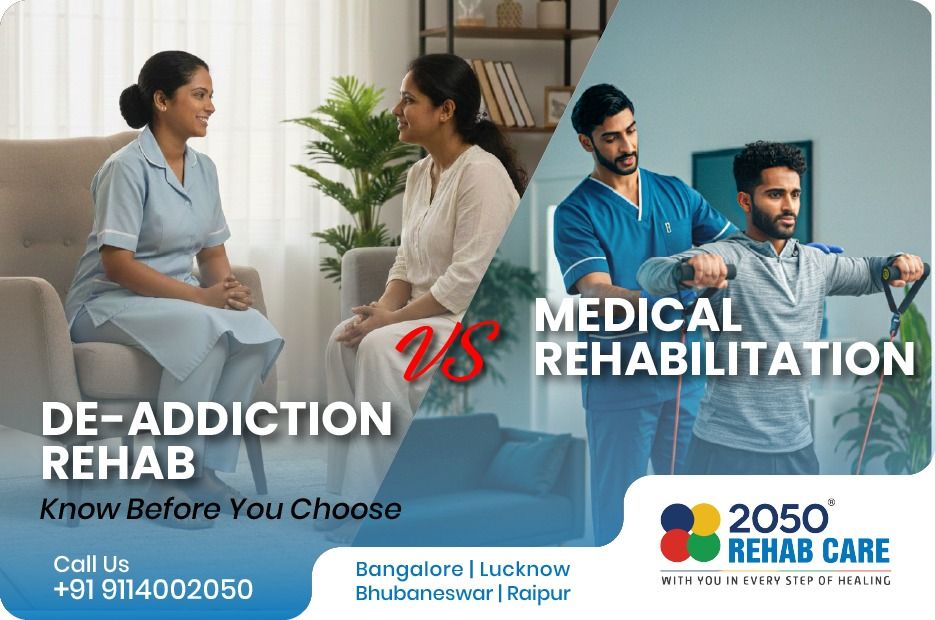
This guide will help you understand the difference between De-Addiction Rehab and Medical Rehabilitation, and how centers like 2050 Rehab Care are transforming modern recovery care in India.
1. What Each Rehab Is About?
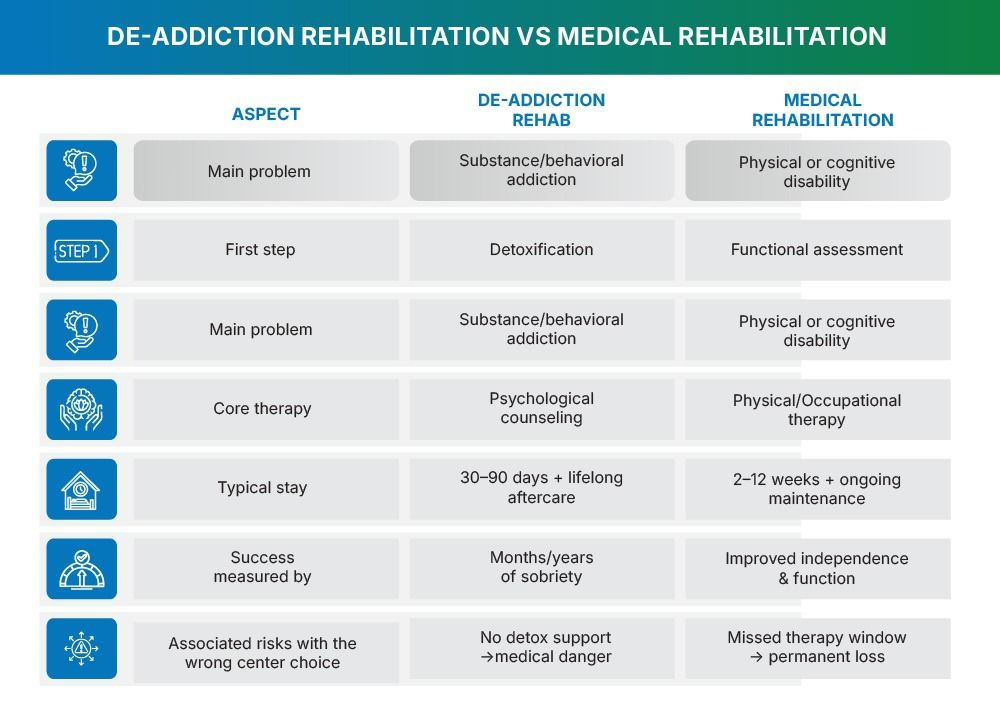
De-Addiction Rehabilitation:
Focuses on substance use disorders — alcohol, opioids, cannabis, prescription drugs, methamphetamine, etc. — and sometimes behavioral addictions like gambling. The core problem is chemical or behavioral dependency that hijacks the brain’s reward system.Medical (Physical/Restorative) Rehabilitation:
Focuses on regaining physical, functional, or cognitive abilities lost due to injury, surgery, illness, or chronic conditions. Common reasons: stroke, spinal cord injury, brain injury, joint replacement, fractures, amputations, neurological diseases (Parkinson’s, multiple sclerosis), cardiac or pulmonary events.2. Primary Goal
De-Addiction:
Achieve and maintain abstinence + rebuild a meaningful life without the substance.Medical Rehab:
Maximize independence in daily activities (walking, dressing, eating, speaking) and improve quality of life through physical restoration or adaptation.3. How the Journey Starts
De-Addiction:
Usually begins with medically supervised detoxification (3–14 days) to safely manage withdrawal symptoms that can be life-threatening (seizures, delirium tremens, severe dehydration).Medical Rehab:
Starts with a detailed functional assessment by physiotherapists, occupational therapists, and rehab physicians. No “detox” phase unless there is overlapping substance use.4. Core Treatment Methods
De-Addiction
●︎ Individual counseling & group therapy●︎ Cognitive Behavioral Therapy (CBT), Motivational Enhancement Therapy
●︎ 12-step or SMART Recovery programs
●︎ Family therapy and codependency work
●︎ Relapse-prevention planning
●︎ Mindfulness, yoga, art therapy (supportive, not primary)
Medical Rehabilitation
●︎ Daily physiotherapy (strength, balance, gait training)●︎ Occupational therapy for activities of daily living (ADL))
●︎ Speech & swallow therapy when needed)
●︎ Pain management, spasticity control)
●︎ Assistive devices and home modification training)
●︎ Advanced therapies as needed — Robotic therapy, hydrotherapy, functional electrical stimulation )
5. Typical Duration
De-Addiction:
28–90 days inpatient is common; long-term success usually requires 1–2 years of continued care (outpatient + support groups).Medical Rehab:
2–12 weeks of intensive inpatient rehab, followed by outpatient or home-based therapy. Some neurological conditions need lifelong maintenance therapy.6. Who Runs the Show
De-Addiction:
Psychiatrists (addiction specialists), clinical psychologists, certified counselors, and peer recovery coaches.Medical Rehab:
Physiatrists (rehabilitation medicine doctors), physiotherapists, occupational therapists, speech therapists, rehab nurses, orthotists.7. Inpatient (IPD) Role
Both may use inpatient care, but for different reasons:De-Addiction IPD:
To provide a substance-free environment and 24×7 monitoring during detox and early recovery.Medical Rehab IPD:
To deliver several hours of therapy daily under close medical supervision when the patient cannot yet manage at home (e.g., after a major stroke or polytrauma).8. Overlap Exists — Dual Diagnosis
Some patients need both. Example: a person with alcohol dependence who suffers a fall and brain injury. In such cases, integrated programs that can handle detoxification and intensive physiotherapy under one roof give the best outcomes.Medical Rehabilitation in India: What Most People Misunderstand
For many years, the word ‘rehab’ in India was associated only with alcohol or drugs. But today, India’s modern healthcare includes world-class rehabilitation centers, offering specialised medical Rehabilitation IPD services —just like hospitals in other advanced countries.
This shift is crucial for elderly patients, stroke survivors, accident victims, and in cases of neurological conditions and post-surgery recovery.
Why 2050 Rehab Care Is Trusted Across India
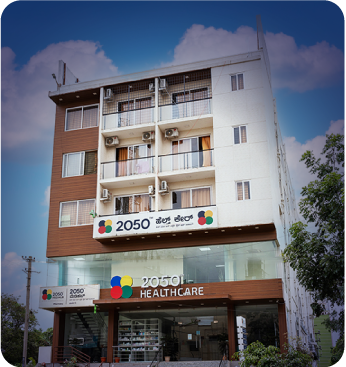
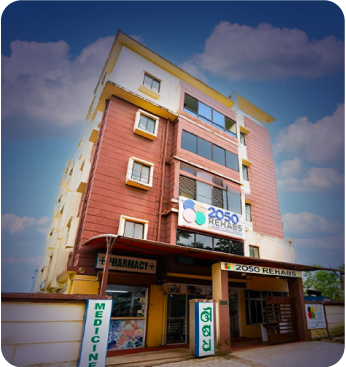
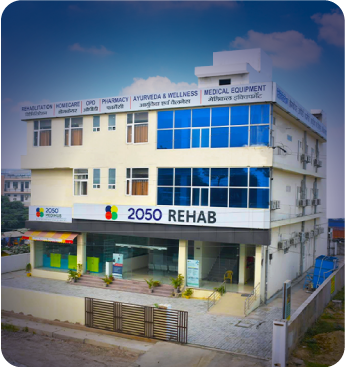
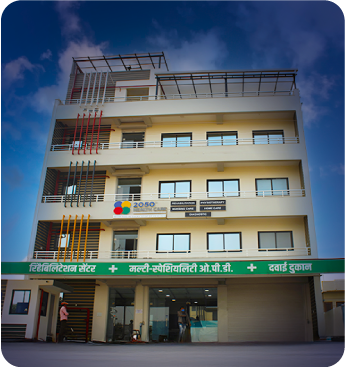
2050 Rehab Care is a pan-India network of dedicated Rehabilitation IPD Centres, known for delivering comprehensive post-hospital, post-ICU, neuro, ortho, geriatric, and other types of rehabilitation services. Our key differentiators include:
●︎ Dedicated IPD rehabilitation facility
●︎ Multi-disciplinary rehab team
●︎ Post-hospital and post-ICU recovery experts
●︎ Modern physiotherapy and neuro-rehab setup
●︎ 24×7 medical & nursing support
●︎ High recovery success rate
Whether you are searching for the Best Rehabilitation IPD Centre in India or a safe recovery environment for elderly patients, 2050 Rehab Care provides complete medical rehabilitation.
Final Takeaway - Choosing the Right Path to Recovery
De-addiction rehabilitation and medical rehabilitation are not in competition — they simply address different root problems. Getting the right start makes all the difference.●︎ If the main challenge is uncontrolled alcohol or drug use → begin with a structured de-addiction program.
●︎ If the main challenge is loss of mobility, speech, daily function, or independence after illness, injury, or surgery → begin with medical/physical rehabilitation.
When it’s unclear which applies (or when both issues coexist), the safest first step is a professional evaluation:
●︎ A psychiatrist for substance-use concerns.
●︎ A physical medicine & rehabilitation (PMR) physician/physiatrist for physical or functional concerns.
Most leading hospitals in India today have both wings, so a single visit is often enough for the right team to guide you or your loved one to the correct starting point.
At 2050 Rehab Care — one of India’s most trusted names in comprehensive inpatient medical rehabilitation — that guidance begins the moment you walk in. Whether it’s recovery after a stroke, accident, surgery, or any illness, we’re here to open the right door for you.
Recovery is absolutely possible. Take the first step with us today.