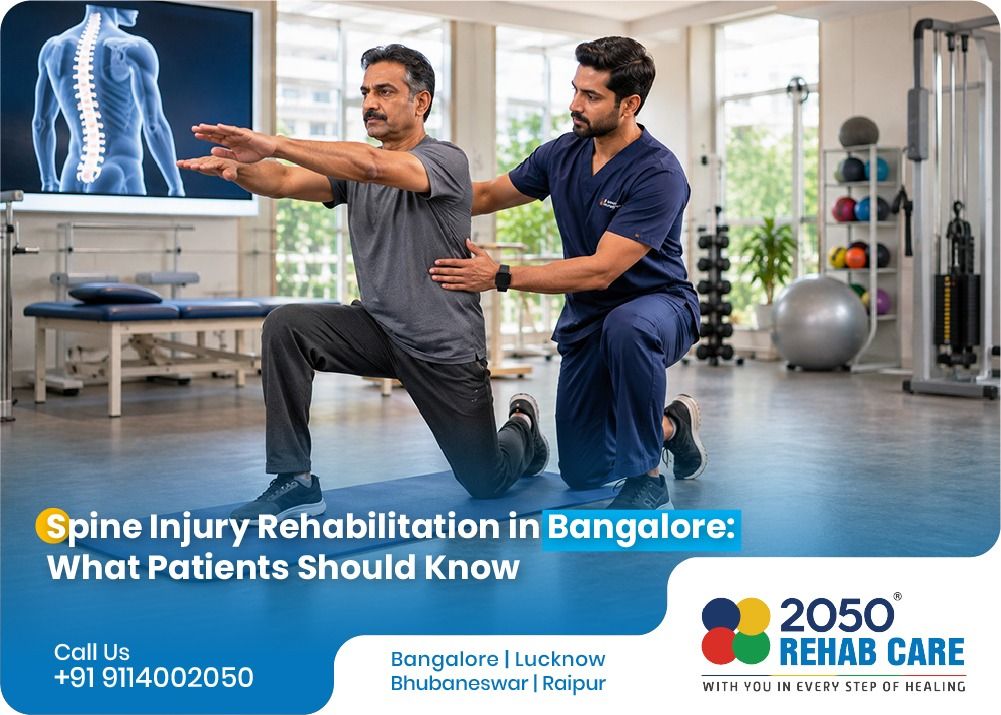
Spine Injury Rehabilitation in Bangalore: What Patients Should Know
Published on 9/24/2026The spine plays a crucial role in supporting the body, protecting the spinal cord, and enabling everyday movement. So, when the spine is injured, the effects can extend well beyond back pain. It can affect even simple daily activities like getting out of bed, walking to another room, sitting for long hours, or getting back to work, which can suddenly become difficult.
In some people, the changes may be temporary, while for others, getting better takes weeks or even months. Along the way, there will be stiffness, muscle weakness, difficulty with movement, changes in balance, or a growing fear of getting hurt again. This makes the person physically as well as emotionally weak and demotivated, especially when a person starts depending on others for tasks they once managed on their own.
The good news is that recovery does not mean simply waiting for the body to heal. With the right medical guidance and a structured rehabilitation plan, patients can gradually work on their strength, movement, balance, and everyday functional abilities. Spinal injury rehabilitation in Bangalore can help individuals move from simply recovering from an injury to regaining confidence and independence in daily life.
Common Causes of Spine Injuries in Bangalore
Spinal injuries can happen in many different situations, and Bangalore's fast-paced lifestyle sometimes adds to the risks.
Long hours of commuting, desk-based work, poor sitting posture, and limited physical activity can contribute to recurring back and spinal problems. At the same time, road traffic accidents are another significant cause of serious spinal injuries.
With Bangalore's busy work culture and long hours spent at desks or on the road, people also tend to ignore early signs such as persistent back pain, stiffness, or weakness. While not every back problem indicates a spinal injury, recurring or worsening symptoms should not simply be brushed aside.
Some common causes include:
- Long traffic and two-wheeler accidents
- Falls injuries
- Sports-related injuries
- Heavy lifting or sudden movements
- Poor posture and prolonged sitting hours
- Age-related changes in the spine
- Certain medical or neurological conditions
Spine Injury Rehab Care in Bangalore focuses on recognising and recovering from these conditions with specialised and timely care.
When Is Spine Injury Rehabilitation Needed?
Not every spine problem requires the same kind of rehabilitation care. Some get cured by only physiotherapy or regular exercise. The need for rehab depends on factors such as the type of injury, its severity, the individual's overall health, and whether surgery or other medical treatment was required.
Rehabilitation is often recommended as part of recovery after:
- Spinal fractures or trauma
- Spinal surgery
- Serious road accident injuries
- Spinal cord injuries
- Significant muscle weakness or restricted movement
- Neurological problems affecting mobility
- Prolonged periods of bed rest
A study on spinal cord injury by WHOhighlights the importance of timely rehabilitation support. The timing of rehabilitation support should be started according to the treating doctor's advice and the individual's condition. The goal should be to make recovery safer, more structured, and more functional according to the individual's conditions and needs.
How Does Rehabilitation Care Help in Recovering?
Struggling to stand without support and then slowly reaching a point where you can stand, walk, and perform daily activities with greater confidence. That gradual progress is what rehabilitation is designed to support.
During a spinal injury, the body loses strength, flexibility, balance, and coordination. Even movements that once felt effortless become challenging. Rehabilitation care helps by addressing these limitations step by step, with regular physiotherapy sessions and exercises selected according to the person's condition, abilities, and recovery goals.
The Process of Spinal Injury Rehabilitation: What Does It Include?
Spinal injury rehabilitation isn't a one-size-fits-all programme. Two people with similar injuries may have very different recovery needs. Usually, the process begins with an assessment of the patient's current condition. The professionals look at movement, muscle strength, balance, flexibility, pain, functional abilities, and other relevant factors.
Based on the report of the assessment, the programme includes:
Physical and Mobility Exercises
Exercises introduced gradually to improve strength, flexibility, balance, coordination, and overall movement.
Gait and Walking Training
For patients experiencing difficulty walking, physiotherapy focuses on improving walking patterns, balance, weight shifting, and safe movement.
Posture and Movement Training
Patients learn safer ways to sit, stand, bend, transfer, and perform daily movements without unnecessarily straining the spine.
Functional Training
The focus here is on real-life activities. The aim is to help patients become more capable of managing everyday tasks.
Pain and Stiffness Management
Depending on the individual's condition, therapists use appropriate techniques to help manage discomfort and stiffness alongside the prescribed exercise programme.
Progress Monitoring
Recovery isn't always a straight line. Regular assessment helps the rehabilitation team understand what is improving and where the programme may need to be adjusted.
How to Choose the Right Rehabilitation Centre in Bangalore
Choosing the right Rehabilitation Centre in Bangalore is a crucial decision, particularly when the patient needs ongoing support after a major injury or surgery. Instead of looking only at the facility or equipment, families should consider the overall rehabilitation approach. As mentioned by WHO, rehabilitation should be person-centred, with interventions tailored to an individual's needs, goals, and level of functioning.
Some useful questions to ask before making the decision:
- Does the centre assess each patient individually?
- Is there a specialized physiotherapy team?
- Is the programme adjusted as the patient's condition changes?
- Does therapy focus on everyday functional activities?
- How is progress monitored?
- Is the family given guidance for supporting the patient at home?
- Does the centre have experience with the patient's particular type of spinal injury?
The right rehabilitation environment makes the patient feel supported while also encouraging them to participate actively in their own recovery.
Taking the Next Step Towards Recovery
Every spine injury recovery journey is different, and what works for one person may not necessarily work for another. That is why having a structured plan, the right specialists, and continued support can make the rehabilitation process feel more manageable. As a professional Rehabilitation Centre in Bangalore, 2050 Rehab Care is dedicated to providing personalised, comprehensive rehabilitation support that helps individuals heal towards greater mobility, independence, and quality of life.